
Are You Losing Muscle on Your Weight Loss Medication? A Dietitian's Guide to Protecting Lean Mass
Jul 01, 2026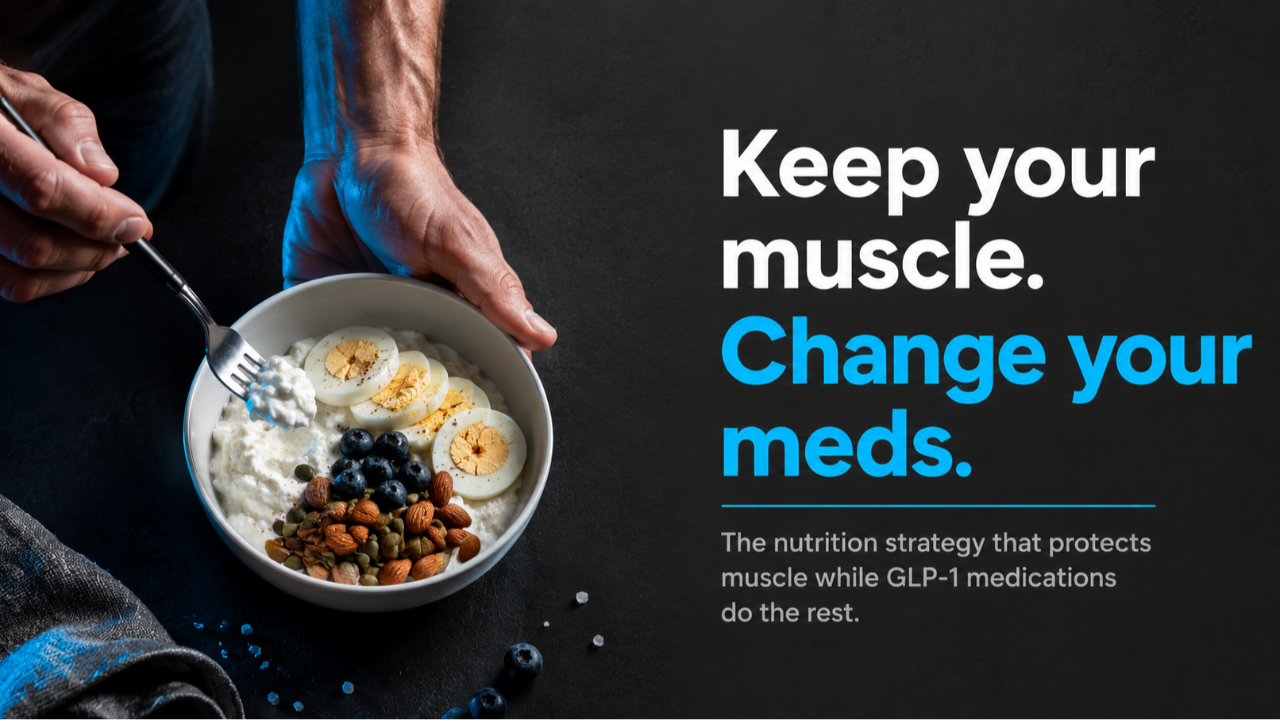
Three months in. The scale is moving. Your clothes are fitting differently. But something else is happening too — you feel weaker. Your legs tire more quickly on the stairs. Your grip doesn't feel what it was. You're losing weight, but is some of it coming from the wrong place?
If you're on a GLP-1 weight loss medication — Ozempic, Wegovy, Mounjaro, or for those in the US, the newer oral options maybe — this is one of the most common concerns I hear in clinic. And it's a legitimate one. Muscle loss on weight loss medication is real, it's measurable, and in most cases, it's largely preventable with the right nutrition approach.
In this guide, I'm going to walk you through what the 2026 research actually says, why muscle loss happens on these medications, and — most importantly — the practical dietitian-led framework for protecting your lean mass while the medication does its job. Because weight loss that takes your muscle with it isn't the win it looks like on the scales.
What the Research Actually Says About Muscle Loss on GLP-1 Medications
The Stanford Medicine Study — June 2026
A study published in June 2026 by researchers at Stanford Medicine confirmed what many clinicians had suspected: semaglutide does reduce skeletal muscle mass. Crucially, the researchers found that under normal conditions this doesn't translate to an immediate loss of strength — but when muscles are put under stress (such as recovering from injury), the picture changes significantly. Muscles in the semaglutide group recovered less well after injury.
The researchers are working on a companion drug (a PGDHi compound, currently in phase 2b trials for age-related muscle loss) that may address this in future. But for the thousands of Australians on GLP-1 medications right now, the practical implication is clear: nutrition and resistance training are the tools available today to protect what you're building toward.
What the Clinical Trials Show
In the large-scale GLP-1 clinical trials (68–72 weeks), approximately 30–39% of total weight lost on semaglutide was lean mass, not fat mass. On tirzepatide (Mounjaro), the picture is somewhat better — roughly 25% lean mass loss has been observed.
It's worth noting some important nuance here. A 2026 paper in Cell Reports Medicine found that while lean mass does decrease on GLP-1 medications, the loss is not disproportionate to overall weight reduction — and relative muscle mass and function (including running performance) can actually improve. This matters for how we frame this: the goal is not to avoid losing any lean mass (that's not biologically realistic during significant weight loss), but to minimise unnecessary lean mass loss and preserve strength and function. That's where nutrition does its most important work.
Why Muscle Loss Happens: The Appetite Suppression Mechanism
GLP-1 medications work, in part, by dramatically reducing appetite. This is the mechanism that drives weight loss — but it creates a nutritional problem that most patients aren't warned about.
In 2026, researchers found that almost 90% of patients on GLP-1 medications fail to meet basic protein targets. The average GLP-1 user in one analysis was consuming just 1,102 calories and 53.8 grams of protein per day — far below what the body needs to preserve muscle tissue. This isn't a willpower failure — it's a predictable biological consequence of appetite suppression. When the body doesn't receive enough dietary protein, it turns to muscle for the amino acids it needs.
This is the core problem — and it has a core solution.
The Protein Gap — And How to Close It
How Much Protein Do You Actually Need?
Current 2026 guidance from the American Diabetes Association, supported by international dietetics evidence, recommends 1.2–1.6 grams of protein per kilogram of body weight per day during active weight loss on GLP-1 medications. Some clinicians are now targeting 1.5g/kg as a practical minimum for patients at higher risk of lean mass loss.
To put that in concrete terms: if you weigh 90kg, you need approximately 108–144 grams of protein per day. Given that the average GLP-1 user is currently eating around 33 grams, the gap is significant. But it's closeable — particularly when you know which foods to prioritise.
Eating Protein When You're Never Hungry
The paradox GLP-1 patients face is that the medication does its job almost too well in the early months. The appetite suppression can feel extraordinary — and eating feels like a chore rather than a pleasure. This is when food quality matters most, and volume matters least.
The "protein first" rule is the most practical starting point: at every meal or snack, eat your protein source before anything else. You have a limited appetite window — don't spend it on bread or crackers. The carbohydrates can wait. The protein cannot.
On days of nausea or extreme appetite suppression, liquid protein sources can help: a Greek yoghurt smoothie, protein-fortified milk, or a small portion of cottage cheese blended into a savoury sauce are all ways to hit protein targets without relying on a large appetite.
High-Protein, Small-Volume Foods for GLP-1 Patients
These foods provide the most protein relative to their volume — critical when appetite is suppressed:
- Greek yoghurt — approximately 17g protein per 170g serve (full-fat is more satiating and easier to tolerate)
- Cottage cheese — approximately 14g per half-cup; blends well into sauces and smoothies
- Eggs — 6–7g per egg; scrambled, poached, or as a frittata with vegetables
- Canned salmon or tuna — approximately 10g per 100g tin; easy to eat in small portions
- Chicken breast — approximately 31g per 100g; slice thin and eat slowly
- Edamame — approximately 11g per 100g; a snack that combines protein and fibre
- Tofu (firm) — approximately 8–10g per 100g; excellent for plant-based patients
- Legumes — lentils, chickpeas, cannellini beans — 7–9g per half-cup, plus fibre
- Ricotta — approximately 11g per 100g; works well as a spread or with fruit
A practical daily target might look like: Greek yoghurt at breakfast, a tuna-based lunch, chicken at dinner, with cottage cheese as a snack. That combination alone can deliver 80–100g of protein in relatively small volumes.
Resistance Training — The Non-Negotiable Partner to Protein
Protein alone is necessary but not sufficient to prevent muscle loss on GLP-1 medications. Resistance training provides the anabolic stimulus — the "signal" — that tells the body to maintain and build muscle tissue, even in a calorie deficit.
A 2025 clinical study combining GLP-1 medications with a resistance training programme and individualised protein intake found that participants lost approximately 13% of body weight but only 3% of muscle mass over six months — significantly better outcomes than medication alone.
Current evidence supports 2–4 resistance training sessions per week involving full-body compound movements: squats, presses, rows, and hinges. You don't need to be in a gym — bodyweight training, resistance bands, and home weights all apply the same stimulus. For personalised programming, working with an accredited exercise physiologist or physiotherapist is strongly recommended.
As a dietitian, my role is to ensure your nutrition supports your training — adequate protein around sessions, sufficient energy, and the right micronutrient status to recover well. Nutrition and movement are inseparable when it comes to lean mass preservation.
Why Seeing a Dietitian Is Part of Your Medication Plan — Not a Bonus
In 2026, Dietitians Australia published a clear position: weight loss medication prescriptions must come with a dietitian referral for ongoing support. This is not a commercial position — it's an evidence-based one. Clinical research shows that involving a dietitian can reduce GLP-1 discontinuation rates by 5–10%, and likely significantly more in real-world settings.
Why does it matter? Because GLP-1 medication management is not static. Your dose changes. Your caloric intake changes. Your protein targets change. Your micronutrient risks change — particularly for vitamins B12, D, iron, calcium and zinc, which can become depleted when food intake drops significantly over months. Without structured monitoring and adjustment, the gaps compound.
A systematic review from the University of Newcastle, published in January 2026, examined 41 randomised controlled trials of GLP-1 and GIP medications — involving more than 50,000 participants. The researchers found that only two of those 41 trials even assessed or reported what participants were actually eating. The nutrition side of weight loss medication is, as the researchers put it, "largely unknown territory" in the trial data. You deserve better than that.
Your prescribing doctor has done exactly the right thing in initiating your medication. A dietitian's role is to complete the clinical picture — personalised protein targets based on your actual body composition, regular review as your dose changes, practical food guidance for the days when eating feels impossible, and monitoring of nutritional status over time. This is not about eating less or dieting harder. It's about eating smarter within the appetite window your medication creates.
Ready to Protect Your Muscle While You Lose Weight?
Your Nutrition Pro specialises in supporting patients on weight loss medications with evidence-based, food-first nutrition plans — personalised to your dose, your body, and your lifestyle.

Frequently Asked Questions
Q: Does Ozempic cause muscle loss?
A: Yes — clinical trial data shows approximately 30–39% of total weight lost on semaglutide (Ozempic, Wegovy) is lean mass, not fat. However, the degree of muscle loss is largely preventable with adequate protein intake (1.2–1.6g per kg body weight daily) and regular resistance training. Dietitian-led nutrition support significantly improves muscle preservation outcomes.
Q: How do I stop losing muscle on Wegovy or Mounjaro?
A: The two most evidence-based strategies are: (1) meeting your daily protein target (1.2–1.6g per kg body weight), prioritising protein-dense foods at every meal; and (2) doing resistance training 2–4 times per week. A dietitian can calculate your personalised protein target and design a practical eating plan that works with your reduced appetite.
Q: How much protein should I eat on semaglutide?
A: Current 2026 guidance recommends 1.2–1.6 grams of protein per kilogram of body weight per day during active weight loss on GLP-1 medications. For a 90kg person, that's 108–144g of protein daily. Most GLP-1 users are eating far less — around 53g per day — creating a significant muscle-loss risk.
Q: Is muscle loss on GLP-1 medications dangerous?
A: Significant lean mass loss carries long-term health risks including reduced metabolic rate (making weight regain more likely), weaker bones, reduced functional strength, and poorer recovery from injury or illness. 2026 Stanford Medicine research found GLP-1-associated muscle changes impair post-injury recovery. These risks are why dietitian support alongside your medication is considered best practice.
A: Dietitians Australia's 2026 position is that weight loss medication prescriptions should come with a dietitian referral. Evidence shows dietitian involvement reduces medication discontinuation by 5–10% and significantly improves body composition outcomes. As doses change and intake drops, personalised nutrition monitoring protects nutritional status and muscle mass over time.
Q: What foods are best to eat on GLP-1 medications to protect muscle?
A: Prioritise high-protein, small-volume foods: Greek yoghurt, eggs, cottage cheese, canned fish, chicken breast, tofu, edamame, and legumes. Eat protein first at every meal. On low-appetite days, liquid protein sources (Greek yoghurt smoothies, fortified milk) help maintain targets without requiring large volumes of food.
Check out our page packed with free recipe eBooks and resources to help you with a variety of conditions.
Stay connected with news and updates!
Join our mailing list to receive the latest news and updates from our team.
Don't worry, your information will not be shared.
We hate SPAM. We will never sell your information, for any reason.