
I Have High Cholesterol, What Should I Eat for a Healthy Heart?
Feb 11, 2026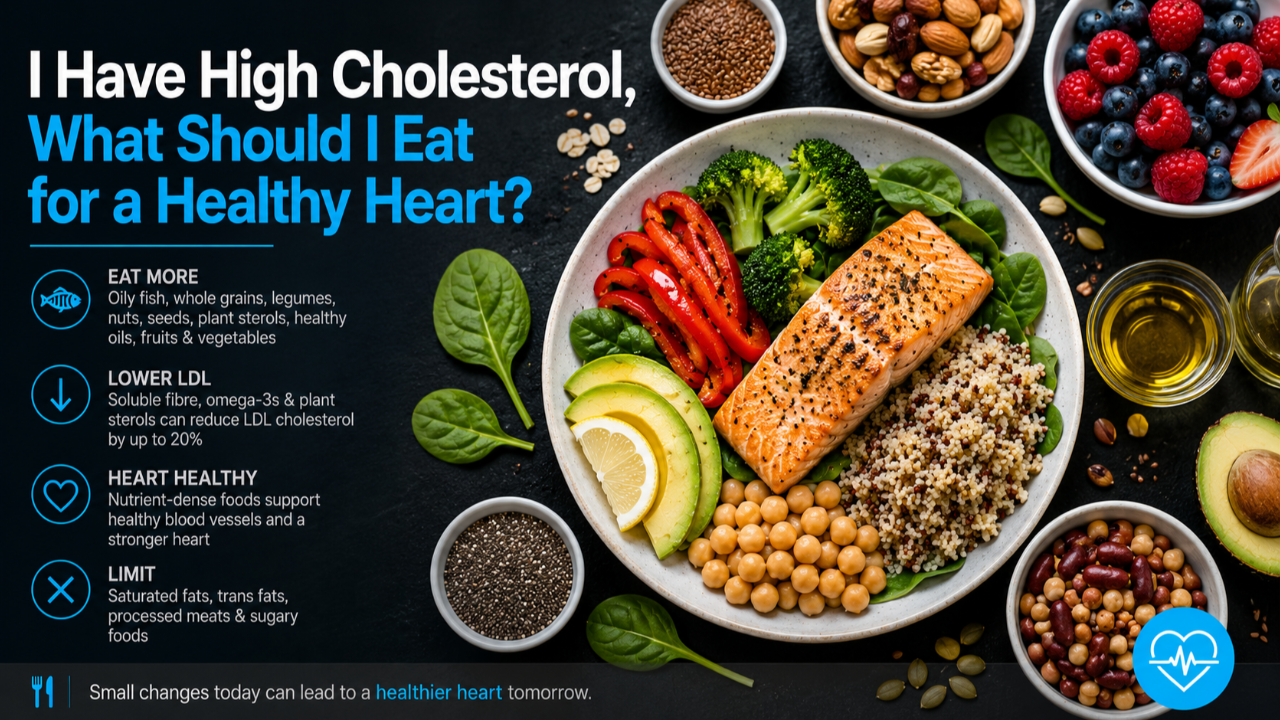
Why Cholesterol Matters
Cholesterol is a waxy substance your body uses to build cells and produce hormones. However, when you have too much low-density lipoprotein (LDL or “bad” cholesterol) circulating in your bloodstream, it can accumulate in arterial walls—leading to atherosclerosis, heart attacks and strokes. According to the Heart Foundation, lowering LDL by just 1 mmol/L can reduce heart disease risk by around 20–25%.
Optimising your diet is one of the most powerful ways to reduce LDL, alongside regular exercise and, where indicated, medication.
Foods to Embrace
-
Oily Fish
-
Examples: Salmon, sardines, mackerel, trout
-
Why: Rich in omega-3 fatty acids, which help lower triglycerides and may modestly raise HDL (“good”) cholesterol.
-
-
Whole Grains & Soluble Fibre
-
Examples: Oats, barley, psyllium husk, brown rice, quinoa
-
Why: Soluble fibre binds cholesterol in the gut, preventing its absorption and reducing LDL levels.
-
-
Legumes & Pulses
-
Examples: Lentils, chickpeas, black beans, kidney beans
-
Why: High in both soluble fibre and plant protein—multiple trials show regular legume intake can lower LDL by 5–10%.
-
-
Nuts & Seeds
-
Examples: Almonds, walnuts, chia seeds, flaxseeds
-
Why: Contain unsaturated fats, phytosterols and fibre. A handful (30 g) daily can reduce LDL by ~5%.
-
-
Natural Plant Sterols & Stanols
-
Sources: Vegetable oils (corn, soybean, canola), nuts (almonds, pistachios), seeds (sunflower, sesame), legumes (kidney beans, chickpeas), whole grains (wheat germ, rye), avocados, Brussels sprouts
-
Why: They compete with dietary cholesterol for absorption in the intestine—diets rich in these foods can lower LDL by 7–10%.
-
-
Heart-Healthy Oils
-
Examples: Extra virgin olive oil, avocado oil
-
Why: High in monounsaturated fats and polyphenols, both of which support endothelial function and healthy lipid profiles.
-
-
Colourful Fruits & Vegetables
-
Examples: Berries, leafy greens, broccoli, capsicum, carrots
-
Why: Packed with antioxidants, fibre and vitamins that reduce inflammation and improve vascular health.
-
Foods to Limit or Avoid
-
Saturated Fats: Fatty cuts of red meat, butter, cream, full-fat dairy—these raise LDL.
-
Trans Fats: Found in many commercial baked goods, pastries and deep-fried foods—linked to both higher LDL and lower HDL.
-
Highly Processed Meats: Sausages, bacon, salami—regular intake is associated with higher heart-disease risk.
-
Refined Grains & Sugary Foods: White bread, pastries, soft drinks—can promote inflammation, weight gain and an unfavourable lipid profile.
The Portfolio Diet: A Deep Dive
Developed by Dr. David Jenkins and colleagues, the Portfolio Diet is a plant-based dietary pattern that actively combines four cholesterol-lowering components:
| Component | Natural Food Sources | LDL-Lowering Effect¹ |
|---|---|---|
| Plant Sterols & Stanols | Corn, soybean & canola oils; nuts (almonds, pistachios); seeds (sunflower, sesame); legumes; whole grains; avocado; Brussels sprouts |
7–10% |
| Soluble Fibre | Oats, barley, beans, psyllium, lentils | 5–10% |
| Soy Protein | Tofu, soy milk, edamame | 3–5% |
| Almonds (Nuts) | 30 g (~ handful) of almonds daily | 3–5% |
Combined Impact: When these elements are followed together, studies show LDL reductions of up to 20%—comparable to first-line statin therapy for some individuals.¹
Putting It into Practice
-
Start with Your Breakfast:
-
Option A: Porridge made with rolled oats and soy milk, topped with sliced almonds and fresh berries.
-
Option B: Whole-grain toast with mashed avocado (rich in sterols) and a side of sautéed spinach.
-
-
Build a Midday Meal:
-
Bowl: Kidney beans and lentils, quinoa, roasted vegetables, a drizzle of olive oil and a sprinkle of sunflower seeds.
-
-
Snack Smart:
-
Handful of pistachios or carrot sticks with hummus (chickpea-based).
-
-
Dinner Choices:
-
Grilled Mackerel with Barley Salad: Toss pearl barley with avocado, capsicum, parsley and olive oil.
-
Stir-fry: Tofu, Brussels sprouts, broccoli, brown rice and sesame seeds.
-
-
Read Labels:
-
Choose “whole-grain” cereals, check for “no hydrogenated fats,” and aim to include at least one sterol-rich food per meal.
-
-
Consult a Dietitian:
-
Personalised adjustments—such as managing energy intake for weight loss or swapping ingredients for allergies—ensure you’re on track for both your cholesterol and broader health goals.
-
Beyond Food: Lifestyle Synergy
While diet is key, don’t forget to:
-
Stay Active: Aim for 150 minutes of moderate exercise per week.
-
Maintain a Healthy Weight: Even a 5–10% weight loss can improve cholesterol.
-
Avoid Smoking & Limit Alcohol: Both can adversely affect lipid metabolism.
Take-Home Message
Adopting a heart-friendly diet doesn’t mean bland meals or strict deprivation. By focusing on whole, nutrient-dense foods—and harnessing the proven power of natural plant sterols, soluble fibre, soy protein and nuts—you can achieve significant LDL reductions and give your heart the best possible support. For personalised guidance and meal planning, consider partnering with an Accredited Practising Dietitian.
¹ Jenkins, D.J.A. et al. “Effect of a dietary portfolio of cholesterol-lowering foods vs lovastatin on serum lipids and C-reactive protein.” JAMA, 2003.
Check out our page packed with free recipe eBooks and resources to help you with a variety of conditions.
Stay connected with news and updates!
Join our mailing list to receive the latest news and updates from our team.
Don't worry, your information will not be shared.
We hate SPAM. We will never sell your information, for any reason.